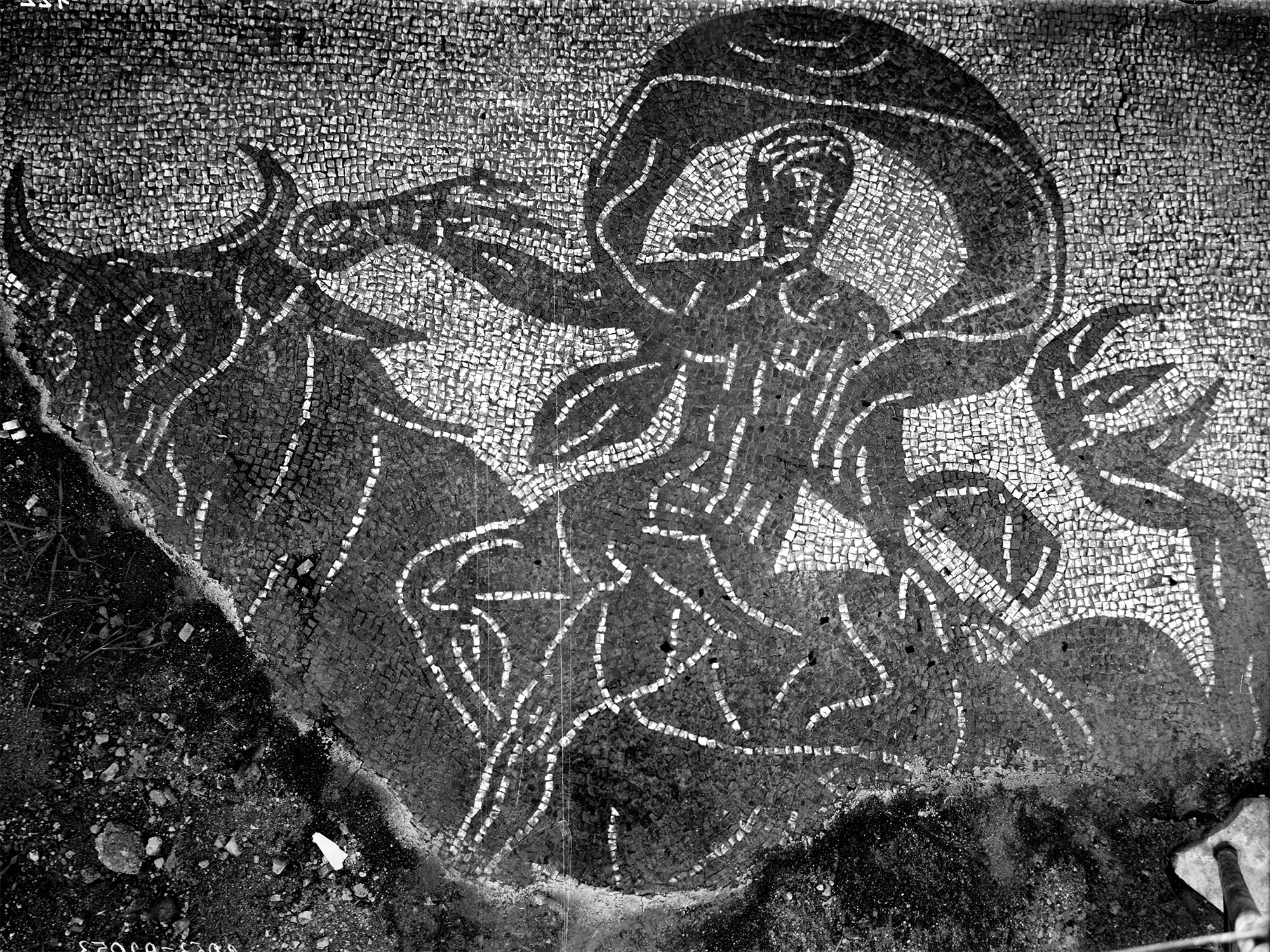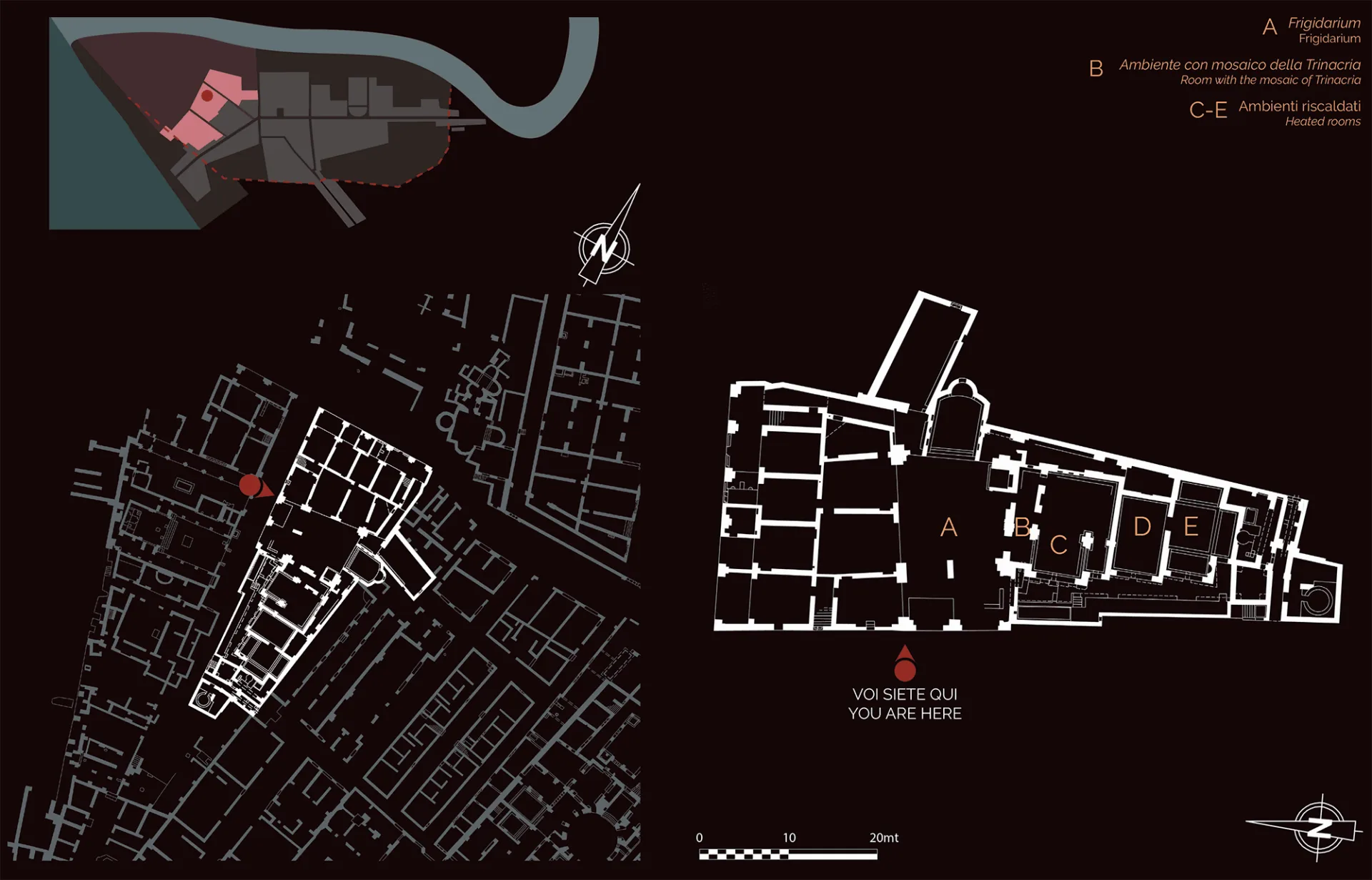
The baths were built in the Hadrianic period (AD 117-138) and transformed in the late 2nd century AD.
A service corridor leads into a large courtyard that also functioned as a frigidarium (room for cold baths) (A).
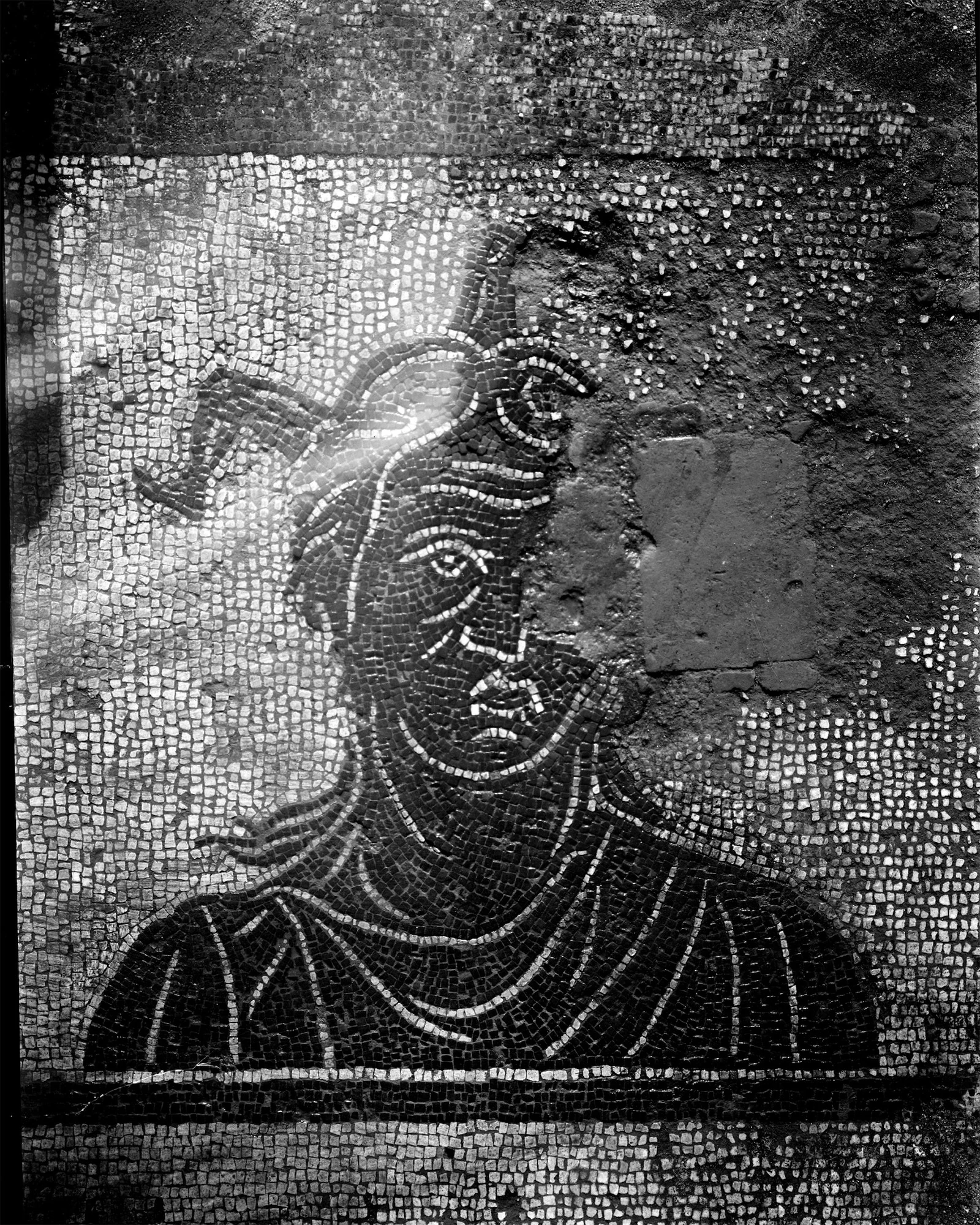
Another corridor (B), connected to the courtyard, has a mosaic floor with a personification of Sicily, or Trinacria, represented as a female bust with three legs on her head. It gives access to the heated rooms, which are in the south part of the complex.
One of the rooms has a mosaic floor with marine motifs (C), whilst it is thought that the adjacent room was used by male sex workers given the presence of an inscription on the mosaic floor.
Finally, the tepidarium (room for warm baths) has a mosaic with a scene of athletes receiving prizes (D).
Uno degli ambienti presenta un pavimento in mosaico con motivi marini (C), mentre si suppone che il vano attiguo fosse adibito alla prostituzione maschile per la presenza di un’iscrizione sul pavimento in mosaico.
Infine, il tepidarium (sala per i bagni tiepidi) mostra un mosaico con scena di premiazione di atleti (D).